
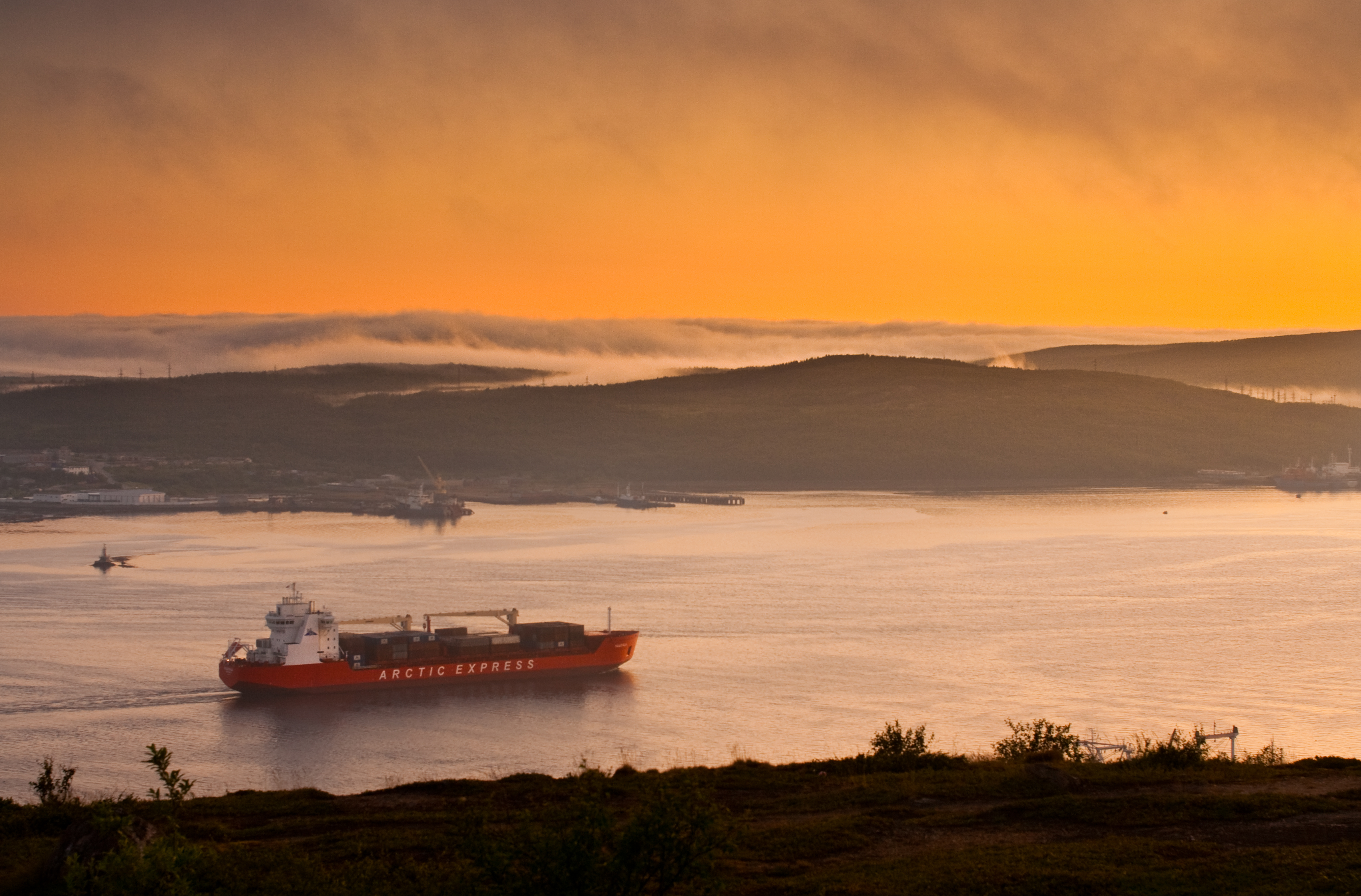
From Chinese cargo vessels and Russian energy projects to fraudulent maritime registries and Indian seafarers, a series of unlikely connections reveals the increasingly complex global networks converging in the High North.
What connects forest-covered Nicaragua and Guatemala in Central America, hot and arid Mali in West Africa, the volcanic islands of Comoros off the coast of East Africa and the northern Indian city of Chandigarh to the icy waters of the Russian and Norwegian Arctic?
At first glance, very little. None of these places features prominently in conventional accounts of Arctic geopolitics. Yet their names have recently surfaced in investigations involving Russian oil tankers, Chinese cargo vessels, sanctioned energy projects, fraudulent maritime registrations and ships operating near Norway’s strategically sensitive northern coastline.
The connections do not constitute a single coordinated operation. Some concern companies engaged in sanctioned commerce. Others involve the appropriation of national identities by unauthorised operators, or seafarers employed aboard vessels caught up in international enforcement actions. These incidents point to a broader shift: an Arctic that is increasingly connected to commercial interests, supply chains and regulatory vulnerabilities originating far beyond the circumpolar region.
How Nicaragua’s Flag Led Investigators to India
In February 2026, investigative organisation Bellingcat uncovered a website purporting to represent the Nicaragua International Aquatica Transportation Administration (NIATA). It offered ship registrations and maritime certificates under the apparent authority of Nicaragua. Among the vessels reportedly using its services was Al Jafzia, a sanctioned tanker detained by the Indian Coast Guard following a suspected unauthorised transfer of Iranian oil. Shortly afterwards, it began broadcasting Nicaraguan nationality, listing Corinto, Nicaragua’s principal Pacific port, as its home port.
Investigators found no evidence that Nicaragua had authorised NIATA to register vessels on its behalf. The clue to the operation’s origins lay in the documents themselves. Their metadata identified Oceaniek Technologies, an Indian maritime services company, as their creator. On 4 November 2026, the U.S. Treasury sanctioned Suniel Kumar Sharma, managing director of Oceaniek Technologies India, and his spouse, Jaspreet Preeti Shahid, accusing their Chandigarh-based business network of supplying fraudulent ship registrations and certificates to vessels transporting Iranian petroleum.
The alleged operation had an extraordinary geographical reach. The Treasury identified purported registries claiming authority from Aruba, Eswatini, Guyana, Mali, Mozambique, Malawi, Nicaragua, Sint Maarten and Timor-Leste, alongside an apparent attempt to impersonate Laos’s maritime authorities. These were activities attributed to private businesses and individuals, not to the Indian government. Indeed, Indian maritime authorities have themselves taken enforcement action against vessels suspected of illicit petroleum transfers. There is no evidence that the Indian state authorised or participated in the alleged fraudulent registration operation.
Four days later, on 8 November 2026, maritime intelligence firm Windward identified 278 Iran-linked vessels using fraudulent registries over a three-month period. 53 claimed Nicaraguan nationality, more than any other purported registry in its study. The countries whose identities were appropriated were not necessarily participants in the fraud. Their names had become valuable to operators seeking the appearance of legitimate maritime registration.
Nicaragua and Guatemala Appear Off Norway
Meanwhile, two vessels were attracting attention in northern Norwegian waters.
The first was Padre, a 30-year-old tanker that reportedly loaded oil at Murmansk before leaving Kola Bay on 19 October. Formerly operating under Russian registration, it had begun claiming Nicaraguan nationality, which maritime records indicated was invalid. Its ownership history was equally revealing. Previously known as Ce Merapi, Polar Rock and Narval, it had passed through Russian companies Transfin-M and Marine Trans Shipping, while Ukrainian Defence Intelligence identified MG-Flot as its commercial and safety manager in a record updated in July 2026. Newer records, reported by The Barents Observer, indicated that registered ownership had passed to Equilibrio Perfecto Maritime. Whether MG-Flot retained operational control remained uncertain. By mid-November, Padre was broadcasting a Comorian AIS identity, adding another claimed nationality to its changing maritime identity.
Nearby, the Chinese-owned heavy-lift vessel Ya Qing Hai Yang had arrived after traversing Russia’s Northern Sea Route from China. It sought shelter near Andøya, home to important Norwegian defence and space installations and situated near the submarine cables connecting mainland Norway with Svalbard. Norwegian inspectors discovered that its purported Guatemalan registration was invalid and that it lacked the necessary safety certificates. The vessel was detained. Its earlier history was consequential. Under its former name, Ocean 28, it had delivered a substation module for Arctic LNG 2’s onshore power plant to Utrenny, serving Russia’s sanctioned Arctic LNG 2 project on the Gydan Peninsula.
Neither Nicaragua nor Guatemala has been shown to have authorised the disputed registrations. Nor has either vessel’s documentation been linked conclusively to the Chandigarh network. What the cases demonstrate is that maritime activity associated with Russian Arctic trade is becoming entangled with regulatory weaknesses extending far beyond northern waters.
Mali’s Unexpected Role in Arctic LNG
Mali provides another revealing connection. In July 2026, two sanctioned heavy-lift vessels, Glory Ocean and Bright Ocean, delivered Chinese-built construction modules to Belokamenka, near Murmansk, for Russia’s Arctic LNG 2 project. Both operated under purported Malian registration identified as fraudulent by Ukrainian Defence Intelligence. The vessels subsequently operated as Glory and Bright under Russian registration. On 9 November, gCaptain reported that ownership and management had transferred to Russia’s Eco Shipping, bringing these specialised carriers more directly into Russia’s Arctic logistics network.
Mali is also among the countries whose maritime registration authorities the U.S. Treasury says Sharma’s network impersonated. This is an intriguing convergence, but we must be clear: that in itself does not establish that the Malian documents used by these particular vessels originated with Sharma or Oceaniek Technologies. It simply shows how the problem of false flags goes so far beyond Sharma and Oceaniek that a country such as Mali can find itself unintentionally reappearing in the affairs of distant regions with which it really may have very little to do.
More broadly, the deliveries reveal the often-overlooked logistics underpinning major Arctic energy projects. LNG developments depend not merely on export tankers but on specialised ships capable of transporting enormous industrial modules, power generation equipment and other components manufactured thousands of kilometres away. China’s industrial capabilities are consequently relevant to the future of Russian Arctic energy in ways that extend well beyond its role as a buyer of hydrocarbons.
India, Comoros and the Human Dimension
Indian connections with these maritime networks are more varied than the fraudulent registration business alone.
In August 2024, the U.S. Treasury sanctioned India-based Ocean Speedstar Solutions, commercial manager of the LNG carrier Pioneer, following its involvement with Arctic LNG 2. The following month, Washington sanctioned Plio Energy Cargo Shipping, another India-based company linked to the LNG carrier Mulan. These were private ship management businesses associated with sanctioned Russian energy activities and not the Chandigarh registry operation.
An altogether different Indian connection emerged in January 2026, when the French Navy intercepted the tanker Grinch in the Mediterranean after it departed Murmansk carrying Russian oil. The vessel claimed registration in Comoros, the Indian Ocean island state between Madagascar and the African mainland. Comorian maritime authorities subsequently stated that they had never registered the tanker and that its purported documents were fraudulent.
The case revealed a further complication. Its captain and all 25 other crew members were Indian nationals. It demonstrated that even if fraudulent registration may be arranged far from a vessel’s actual location, the consequences can fall upon seafarers who had no demonstrated involvement in obtaining the documents. Concerns over the crew’s welfare and repatriation followed the detention, illustrating how sanctions enforcement, flag state accountability and the international maritime workforce can become intertwined. The case was subsequently resolved: the International Transport Workers’ Federation confirmed the crew’s repatriation in June 2026.
The Indian presence in these cases must not be conflated with the Indian government. The companies sanctioned over Russian Arctic energy activities were private commercial operators, while the Chandigarh investigation concerns individuals and businesses accused of fraudulent registration. The Indian seafarers aboard Grinch represent a different category altogether: workers employed within the international maritime industry, whose nationality provides no basis for imputing wrongdoing. These distinctions matter in an Arctic shipping economy where ownership, management, registration and crew nationality frequently cross national boundaries.
The Arctic’s Expanding Cast of Characters
The most revealing development may be that the same maritime registration network has appeared in sanctions findings concerning both Russia and Iran. In July 2026, the European Union sanctioned Sharma over his association with fraudulent registries that had supported vessels transporting Russian petroleum. In November 2026, the United States targeted the wider network over its alleged support for Iranian oil shipments.
These cases show how thoroughly Arctic shipping has become entangled with global commerce, sanctions evasion and labour markets far beyond the High North. Companies operate across multiple oceans; industrial modules travel from Asian factories to Arctic construction sites; and crews are recruited from countries with little direct geopolitical stake in polar affairs.
Maritime identity itself has become a commercial vulnerability. In April 2026, the International Maritime Organization reported 529 cases of vessels falsely claiming national flags over the preceding year, affecting nearly 40 countries. Its Legal Committee approved new guidelines intended to strengthen registration and verification.
For Arctic coastal states, these developments raise urgent questions beyond conventional military security. Who ultimately owns and controls vessels operating in northern waters? Which authorities have certified their safety? Are they properly insured? Who bears responsibility for pollution or accidents in remote seas with limited emergency response capacity? Answering those questions requires distinguishing legitimate commerce, sanctions violations, safety deficiencies and genuine security threats through evidence and effective oversight, rather than assuming every irregular vessel is engaged in espionage or sabotage.
The changing Arctic is often described in terms of melting ice, new shipping passages, mineral resources and great power competition. Those developments matter, but they tell only part of the story. The more demanding task is to understand the many actors now entering northern affairs, often indirectly, and the commercial and institutional networks through which they exercise influence.
Taken individually, a fraudulent Nicaraguan flag, Guatemalan registration or Malian certificate, a Chinese-built industrial module bound for Siberia and a stranded Indian crew sailing under a Comorian flag may appear to have little in common. Taken together, they show how deeply Arctic shipping now relies on opaque global networks – exposing the region to legal ambiguities and regulatory blind spots that traditional polar diplomacy is ill-equipped to manage.