
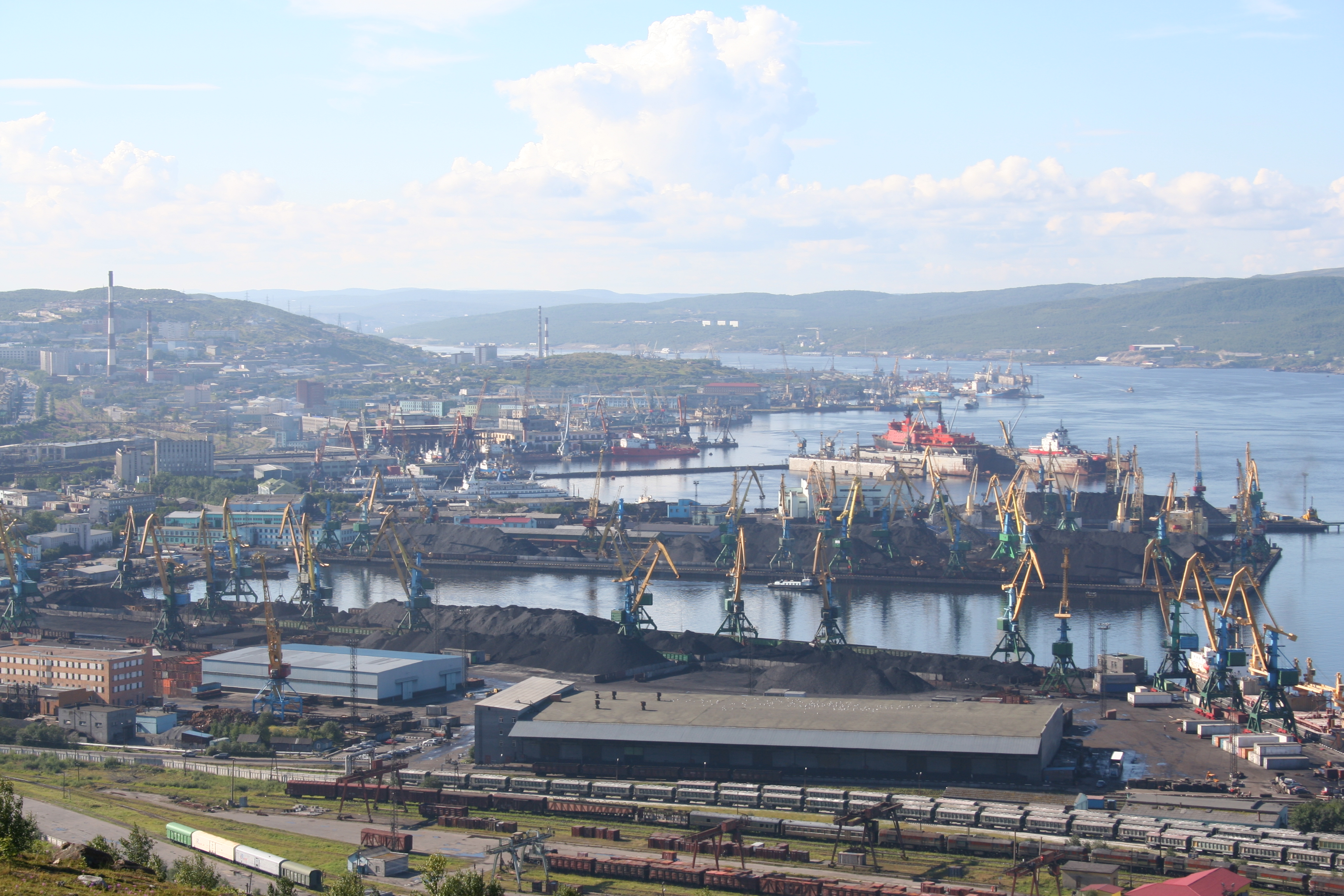
As war disrupts the Black Sea and Sea of Azov, Russia is looking north to sustain its agricultural exports. Wheat sailing from Murmansk to Casablanca reveals how conflict is redrawing the geography of global trade.
Why would Russia transport wheat thousands of kilometres north to the Arctic port of Murmansk, only to ship it south towards Casablanca in Morocco?
The question would once have seemed unthinkable. Russia is the world’s largest wheat exporter, Morocco an established customer, and the Black Sea has long provided the obvious maritime connection between Russia’s southern grain belt and North Africa.
Yet, in October 2026, Reuters reported that an initial 3,400-tonne grain consignment was being loaded at Murmansk, alongside plans for a much larger shipment of roughly 28,000 tonnes destined for Casablanca. By 11 November, the bulk carrier New Born had left Murmansk for Morocco, with a 29,500-tonne shipment aboard. On 13 November, Bloomberg reported that a second vessel had begun loading 30,500 tonnes of wheat for Morocco. For Moscow, the longer route offered a way to retain North African customers while its southern ports were under attack.
The explanation lies in the disruption of one of the world’s most important agricultural trade networks, and the increasingly uncomfortable consequences of Russia’s war against Ukraine.
The Breadbasket of the World
Before Russia’s full-scale invasion in February 2022, Russia and Ukraine were agricultural powerhouses whose exports underpinned food security across several continents. Together, they accounted for approximately 27 per cent of global wheat exports in 2021, just before the invasion, alongside substantial shares of international maize, barley and sunflower oil trade. Their customers stretched from Egypt, Morocco and Tunisia to Türkiye, Bangladesh and Indonesia. Russia and Ukraine together supplied around three-quarters of the wheat imported by Egypt and Lebanon.
The geography was straightforward. Russian grain travelled to Black Sea ports such as Novorossiysk and Taman, or through the Sea of Azov. Ukrainian wheat and maize moved through Odesa, Chornomorsk and Pivdennyi, alongside Mykolaiv and the Azov coast. From there, ships passed through the Turkish Straits into the Mediterranean, or onwards through the Suez Canal towards Asian markets. These were arteries of global food security.
Ukraine’s Battle to Keep Its Grain Moving
Russia’s invasion shattered that system. Russian naval forces blockaded Ukraine’s principal Black Sea ports, while the occupation of Mariupol and Berdiansk deprived Ukraine of its major Sea of Azov outlets. Millions of tonnes of grain were stranded, contributing to food price pressures and fears of shortages.
In July 2022, Türkiye and the United Nations brokered the Black Sea Grain Initiative, reopening a limited maritime corridor. Nearly 33 million tonnes of agricultural products subsequently left Ukrainian ports before Russia withdrew in July 2023.
Ukraine nevertheless established an alternative Black Sea corridor, while the European Union developed Solidarity Lanes through roads, railways, the Danube and neighbouring ports. By June 2026, approximately 90 per cent of Ukrainian grain and oilseed exports were again moving through the Black Sea.
Then renewed attacks disrupted maritime trade. According to the Council of the European Union, by August 2026 approximately 90 per cent of Ukraine’s grain and oilseed exports had been rerouted through the EU Solidarity Lanes. Ukraine had demonstrated remarkable resilience, but at considerable cost.
Russia’s Unexpected Reversal
Now Russia faces a disruption of its own. Ukrainian attacks on Russian vessels and export infrastructure have exposed the vulnerability of the maritime system on which Moscow depends.
In the 2025–26 grain marketing year, Russia’s Black Sea and Sea of Azov terminals handled approximately 46 million tonnes of grain, almost 90 per cent of its seaborne exports. By October 2026, shipments through those southern ports had reportedly collapsed by approximately 94 per cent year-on-year to 339,000 tonnes. Overall seaborne grain exports fell 55.8 per cent to 2.8 million tonnes.
Moscow began diverting cargo northwards. Baltic ports handled approximately 1.2 million tonnes in September, compared with fewer than 50,000 tonnes a year earlier, and now accounted for more than 60 per cent of seaborne grain exports. In October, combined Baltic and Arctic shipments reached 1.72 million tonnes, nine times their level a year earlier. Terminals previously handling other commodities were adapted for grain. But the Baltic presents its own complications.
Almost entirely surrounded by NATO countries, it is strategically sensitive, while Baltic governments have tightened scrutiny of Russian agricultural trade, partly over concerns about grain originating in occupied Ukrainian territories. And so Russia has begun looking farther north.
The Murmansk-Casablanca Connection
Murmansk offers something Russia’s southern ports increasingly struggle to guarantee: relatively secure access to international shipping lanes. Its ice-free harbour opens onto the Barents Sea and North Atlantic, allowing vessels to reach markets in North Africa without navigating either the Black Sea or the Baltic.
But this geographical advantage comes at a considerable economic cost. Murmansk lies roughly 2,700 kilometres from Novorossiysk, Russia’s principal southern grain-export gateway, requiring lengthy rail journeys, additional handling and port infrastructure not traditionally geared towards large-scale agricultural exports. Industry estimates suggest that routing grain through the Arctic costs three to five times more than using Black Sea terminals, adding roughly USD 18-25 per tonne in logistics expenses. Its commercial viability therefore depends on whether the costs of these detours are outweighed by the risks of using more established routes.
Sanctions add another layer of complexity. Although Western restrictions do not generally prohibit Russian grain or fertiliser exports, Russia has complained that banking, insurance and logistical difficulties can complicate transactions. Russia’s shadow fleet, developed principally to circumvent oil sanctions, illustrates the wider adaptation of its maritime trade to Western pressure. Other opaque shipping networks have been implicated in transporting grain allegedly taken from occupied Ukrainian territories, although there is no established connection between such operations and the Murmansk-Casablanca shipment.
The Murmansk-Morocco corridor is already operating in reverse. On 31 July 2026, Reuters reported that a tanker was discharging roughly 30,000 tonnes of petrol at Murmansk after loading in the Moroccan port of Tangier – an emergency measure triggered by Ukrainian drone strikes on Russia’s domestic refining capacity. By mid-September, The Barents Observer had identified at least seven product tankers – including sanctioned shadow-fleet vessels – and reported deliveries of over 320,000 tonnes of fuel to the Arctic port over the preceding month. That a major oil producer is importing refined fuel from North Africa via the Barents Sea while preparing to export wheat south along the same axis underscores just how deeply the war has inverted normal trade logic.
What makes this route significant, then, is not a sudden improvement in Arctic shipping economics. It is the changing balance between commercial efficiency and geopolitical risk, with Russia increasingly prepared to absorb higher transport costs to maintain access to international markets.
The Arctic Escape Route
Murmansk’s attraction lies not in retreating sea ice but in offering an alternative to Russia’s increasingly vulnerable southern maritime corridors. Whether the additional transport costs make this route commercially sustainable remains uncertain. What matters is the changing calculation behind it.
Distance and cost traditionally determined the routes grain exporters preferred. Now military threats, sanctions, insurance and access to secure ports are becoming equally consequential. Russia’s war has made its established export geography less dependable, compelling Moscow to consider routes that would once have made little commercial sense.
Herein lies another dimension of the Arctic Century. The High North is gaining importance not simply because its ice is retreating, but because geopolitical instability elsewhere is changing the relative value of northern maritime access. The Arctic is becoming an alternative for trade displaced from more contested waters, even if its infrastructure and economics impose limits of their own.